
KLOW is a research-peptide blend, and the honest answer to where it came from is that its exact origin isn’t well documented in public sources. Blends like this usually take shape quietly, inside small research circles where people combine compounds, test ideas, and settle on a shorthand name that sticks. If you want to check the blend here you’ll see what it is today. Tracing how it got there takes a bit more digging.
Think of it like a chair design that spreads through a woodworking community. Nobody remembers who first rounded that armrest or tapered that leg. Someone tried it, a few friends borrowed it, and the name got passed along at the bench until it was just what everyone called it. Names in research work the same way.
In this article, we’ll define KLOW plainly, explain how blends and their names tend to develop, and walk through a simple, repeatable method for tracing origins yourself, with no invented dates or shaky claims along the way. It’s the same patient, hands-on approach we encourage at Vincent Furniture Making Classes: look closely, ask good questions, and learn by doing alongside a community that’s happy to help.
What We Mean When We Say “KLOW”
If you’re new to the name, here’s the plain-language version. In this article, “KLOW” refers to a blend: a combination of two or more components mixed on purpose so the result does something that none of the parts manage alone. Think of mixing a custom finish at the bench. You aren’t hunting for a magic ingredient, you’re balancing several so the whole behaves the way you need. If you’re still finding your feet, our guide to beginner cabinet making shows how that same blend-and-balance thinking shows up in everyday shop work.
Here’s a short glossary so no one gets left behind:
- Blend
- A deliberate mix of components, combined so the result performs better than any single ingredient would on its own.
- Research community
- A loose network of people, such as academics, hobbyists, and lab groups, who share questions, methods, and results.
- Preprint
- A research write-up shared publicly before formal review, so ideas can circulate early.
- Lab notes
- Informal records kept while experimenting, often rough, handwritten, and never published.
- Informal naming
- A nickname or shorthand label that sticks through casual use rather than official decision.
Now for the honest part. We can describe what a blend is and why a name like KLOW might take hold. We can’t confirm a single founding moment or a neat recipe, and we won’t invent one. Wherever the record is thin, we’ll tell you.
Where the Trail Begins: Research Communities and Shared Ideas

How a Name Takes Root
Think about the nicknames in your own shop. Maybe someone calls a particular scrap-wood glue-up “the sandwich,” or a favorite wipe-on finish becomes “grandpa’s mix.” Nobody votes on these names. They just stick because they’re quick to say.
Research communities work the same way. A label often begins as a bit of shorthand scribbled in a lab notebook, tossed out in a hallway chat, or typed into a forum thread. Someone needs a fast way to refer to a mixture, so they coin a tag. A colleague hears it, uses it, and passes it along.
Over time, repeated use gives the name weight. Eventually it appears in a talk or a written report, and it starts to feel official.
Early on, though, naming is casual. Spellings shift, the same label might describe slightly different recipes, and two groups may use different names for the same thing. That’s normal, and it’s why a name’s start is rarely tidy.
Why the Early Record Can Be Patchy
Anyone who’s tried to trace a family recipe knows the problem. The early history of a blend like KLOW is rarely tidy. Notes get scattered across notebooks and lab folders, and plenty of promising work never gets published at all. Different groups also use overlapping terms, so two people can describe the same mixture with different labels, or give one label to different mixtures.
Then there’s credit. In research communities, ideas usually pass through many hands, each person tweaking and testing before passing it along. Pinning a single “inventor” on that process is a bit like crediting one person with the dovetail joint.
That’s why neat origin stories deserve a raised eyebrow. A clean tale with one hero and one date may be satisfying, but it often smooths over a messier, more collaborative truth.
Treat early records as clues, not verdicts.
Tracing the Blend’s Origins Step by Step
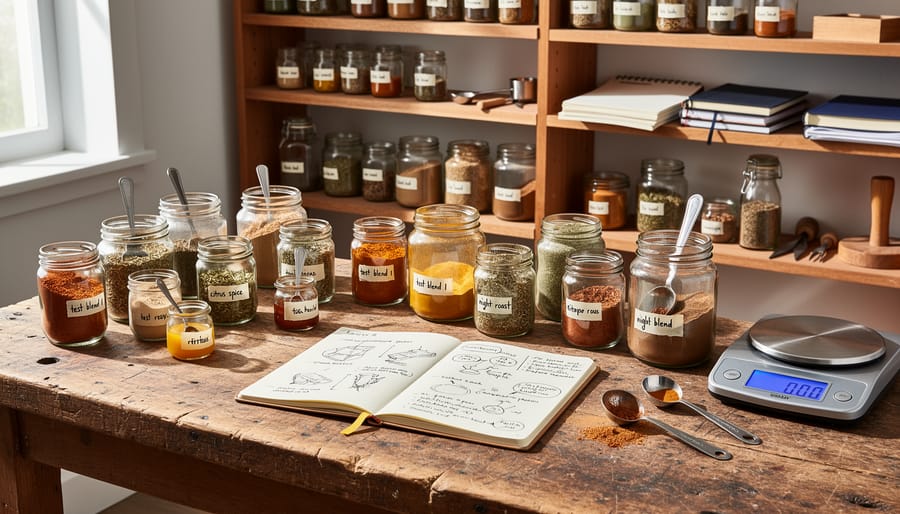
Think of tracing a blend like restoring an old cabinet. You don’t start sanding; you start by looking closely at what’s in front of you. Here’s a project you can follow with KLOW or any unfamiliar material you meet in the shop.
Step one: write down what you already know. Jot the name, where you first saw it, and any claims attached to it. Just like laying out your hand tools before a build, you want everything visible before you begin.
Step two: find the earliest mention you can. Search for the oldest sources that use the term, such as papers, conference abstracts, forum threads, or workshop handouts. Note the date and who wrote it. Don’t assume the first one you find is the true start; it’s only the earliest one you’ve found so far.
Step three: follow the citations backward. If a source credits another, chase that one down next. Each link gets you one bench closer to where the idea began. Keep a simple list so you can retrace your steps.
Step four: compare how the name is used. Early on, terms often mean slightly different things to different groups. Write down each definition you meet and see where they match and where they drift apart.
Step five: ask the people who were there. Researchers, authors, and long-time community members often remember details that never made it onto the page. A polite, specific question goes a long way.
Step six: record what’s confirmed and what isn’t. Sort your notes into two piles: things you can back up and things that are only claimed. This is the step that keeps your story honest.
A little patience helps here. Just as you’d keep things in proportion when sizing a table to a room, keep your conclusions in proportion to your evidence. If the trail goes cold, saying “we don’t know yet” is a perfectly good result.
The best part is that none of this requires special credentials. Anyone curious and careful can do it, and the habit will serve you every time a new product, finish, or technique crosses your bench.
What the Research Communities Contributed
No single person or lab usually “invents” a blend. More often, a handful of different groups each add something, and the whole thing takes shape over time. Since the full record on KLOW is thin, here’s a general picture of the roles that tend to appear in research communities rather than a claim about who did what.
Think of it like a shop where a new finish catches on. Someone tries a mix on scrap wood. Someone else repeats it and notices where it fails. A third person writes down the ratios, and a fourth teaches it at a class. Nobody did the whole job.
| Role | What they typically contribute | What to look for in their work |
|---|---|---|
| Experimenting | First rough combinations and early ideas, often informal | Loose notes, trial-and-error language, few firm conclusions |
| Testing and refining | Repeated trials that adjust proportions and fix weak points | Clear methods, comparisons, honest mention of what didn’t work |
| Documenting | Written records that turn scattered practice into something others can follow | Consistent terminology, defined terms, references to earlier work |
| Sharing with wider audiences | Talks, summaries, and tutorials that carry the idea beyond its first circle | Simplified explanations; check whether they point back to original sources |
Notice that each role depends on the others. Early experimenters need testers to find out whether an idea holds up. Testers need documenters so their findings don’t vanish. Documenters need people who share the work so it actually gets used.
It also pays to read each kind of source a little differently. A casual forum post and a careful write-up serve different purposes, and neither is “wrong.” They just sit at different stages of the story.
What stands out is the generous spirit behind it all. People hand off half-finished ideas, answer questions, and build on each other’s progress. If you’ve ever swapped a tip at the bench or borrowed a jig someone else improved, you already know how that feels.
Why Origin Stories Matter to Makers

Knowing where a material or blend comes from changes how you use it. When someone tells you a finish is “bulletproof” or a blend “works every time,” the origin story is your best fact-checking tool. Who first tested it? Under what conditions? Did it hold up on oak, or only in a lab? Those questions help you separate genuine results from enthusiastic marketing.
Think about dovetails. Before you cut your first set, it helps to know why the joint exists: it resists being pulled apart, which is why drawer makers have trusted it for centuries. That history tells you when to reach for it and when a simpler joint will do. The same goes for any blend you meet in the shop, KLOW included. Understanding its roots helps you use it with confidence rather than guesswork.
There’s a quieter benefit, too. Once you’ve traced a story carefully, you can pass it on accurately. A new woodworker at the next bench will trust what you tell them, so it’s worth saying “here’s what we know, and here’s what’s still uncertain.”
Staying curious is how every maker grows, and a little background reading on your materials is a habit that’s worth the time on any project you take on.
So, where does that leave us? KLOW is a blend, a name that took shape the way many do, gradually, passed between research communities until it stuck. We followed the trail through shared notes, informal labels, and overlapping terms, and we were honest about the gaps. Plenty of the early record is patchy, and a few details may never be pinned down. That’s okay. Knowing what you don’t know is part of good craftsmanship.
Keep asking questions. When you meet an unfamiliar material, finish, or technique, trace it back the way we did, and don’t be shy about sharing what you uncover. Someone at the next bench probably wondered the same thing.
That curiosity is exactly what we nurture at Vincent Furniture Making Classes, where hands-on learning and a supportive community go together. Bring your questions, bring your sawdust-covered hands, and let’s keep learning side by side.